- +91-9035034193 / +91-9035034194
- Mon - Sat : 09:00 am - 18:00 pm

1. What is CPR?
CPR stands for Cardiopulmonary Resuscitation. It is a life-saving technique used in emergencies to maintain blood and oxygen flow to brain and heart when their heart or breathing has stopped.
2. When should CPR be performed?
CPR should be performed immediately in cases of cardiac arrest, drowning, suffocation, or any situation where a person is unresponsive, not breathing normally and not having palapable pulse .
3. How do I perform CPR?
To perform CPR, follow these steps:
1. Check the scene for safety and assess the person’s responsiveness.
2. Call for emergency medical help (dial 108).
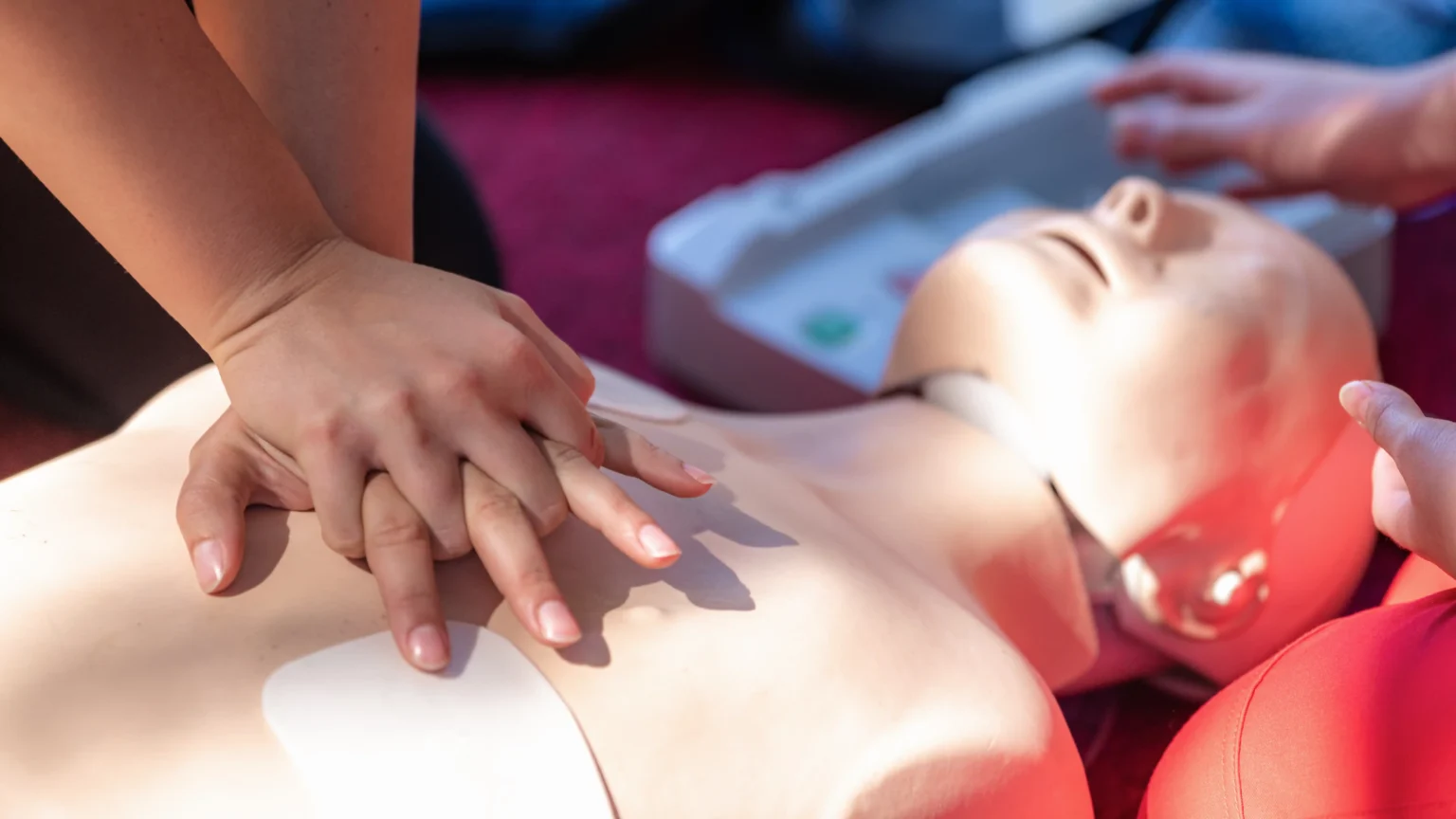
3. Begin chest compressions: Place the heel of one hand on the center of the person’s chest and interlace your fingers. Push down at least 2 inches at a rate of about 100-120 compressions per minute.
4. Give rescue breaths: Tilt the person’s head back slightly, lift the chin, and give two breaths into their mouth, watching for the chest to rise with each breath.
5. Continue cycles of compressions and breaths until help arrives or the person shows signs of life.
4. Can anyone perform CPR?
Yes, anyone can learn and perform CPR. Training in CPR is recommended for individuals who may need to respond to emergencies, such as healthcare providers, first responders, teachers, and caregivers.
5. What is an AED and how does it relate to CPR?
An AED (Automated External Defibrillator) is a portable device that can analyse a person’s heart rhythm and deliver an electric shock if needed to restore a normal heartbeat. AEDs are often used in conjunction with CPR during cardiac arrest emergencies.
6. Do I need to be certified to perform CPR?
While certification is not required to perform CPR in an emergency, completing a CPR certification course provides valuable training and skills practice. Many employers, schools, and organizations require certification for certain roles or positions.
7. How can I find a CPR training course?
CPR training courses are offered by organizations such as the American Heart Association, Red Cross, and other accredited providers. We also offer lifesaving CPR skill at your organization.
8. Can CPR save a life?
Yes, CPR can significantly improve the chances of survival for a person experiencing cardiac arrest or other life-threatening emergencies. Immediate CPR and early defibrillation can make a critical difference in saving life.
9. When CPR should not be administered?
CPR should not be given to an unconscious person who is breathing normally and has a pulse.
To assist individuals in reaching out to OHCA patients and enhancing the care of cardiac arrest, thereby improving survival rates of OHCA in India.
Copyright © 2024. All rights reserved.